


North & Row Advisory
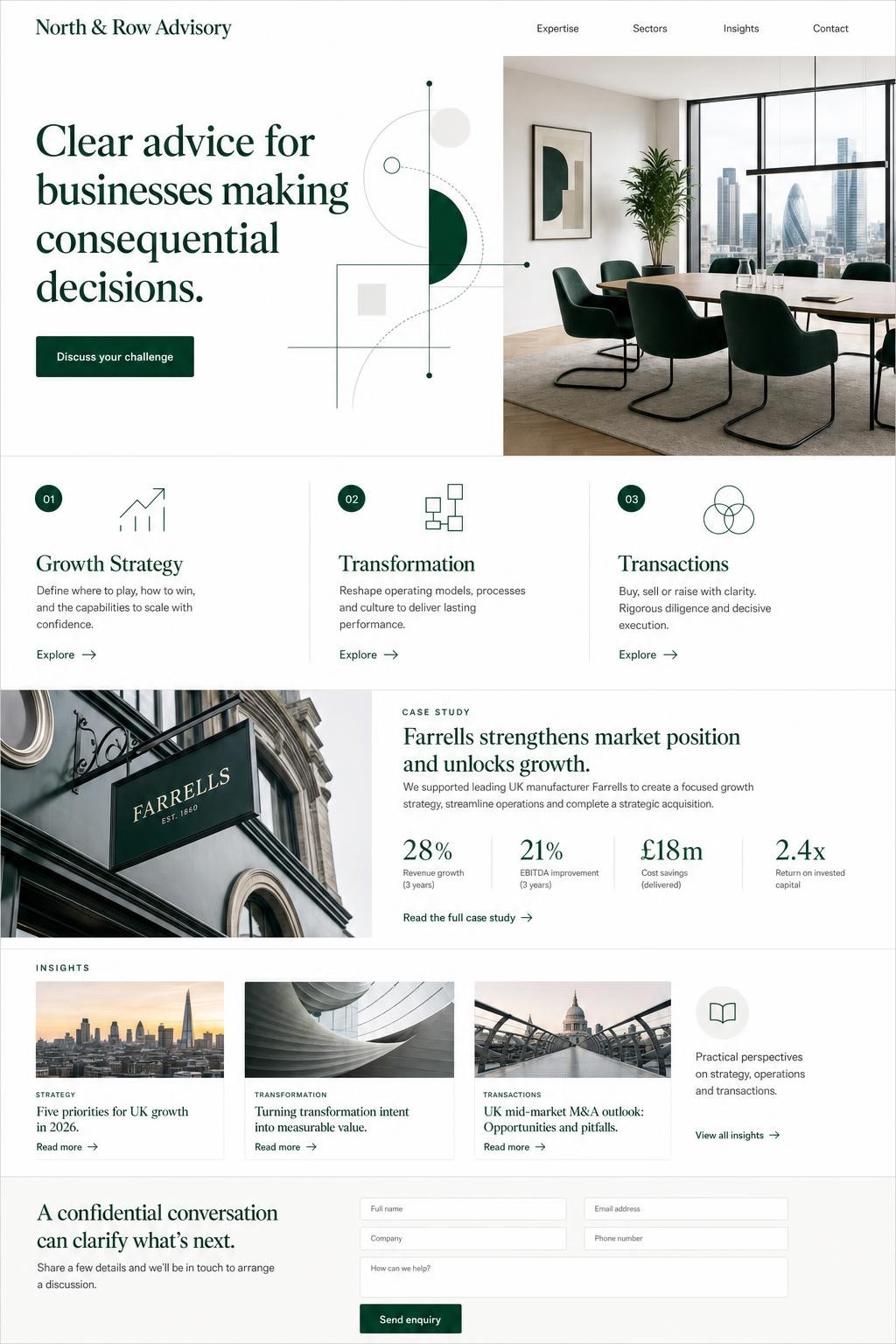
Clarity builds confidence.
Give expertise a clear, considered home.
Explore the conceptWebsites for UK businesses that make your services clear and help customers get in touch. From page planning and responsive design to tested enquiry forms and handover.
No two businesses have the same story. Explore how your services, your work and your personality can shape the design.
Give expertise a clear, considered home.
Explore the concept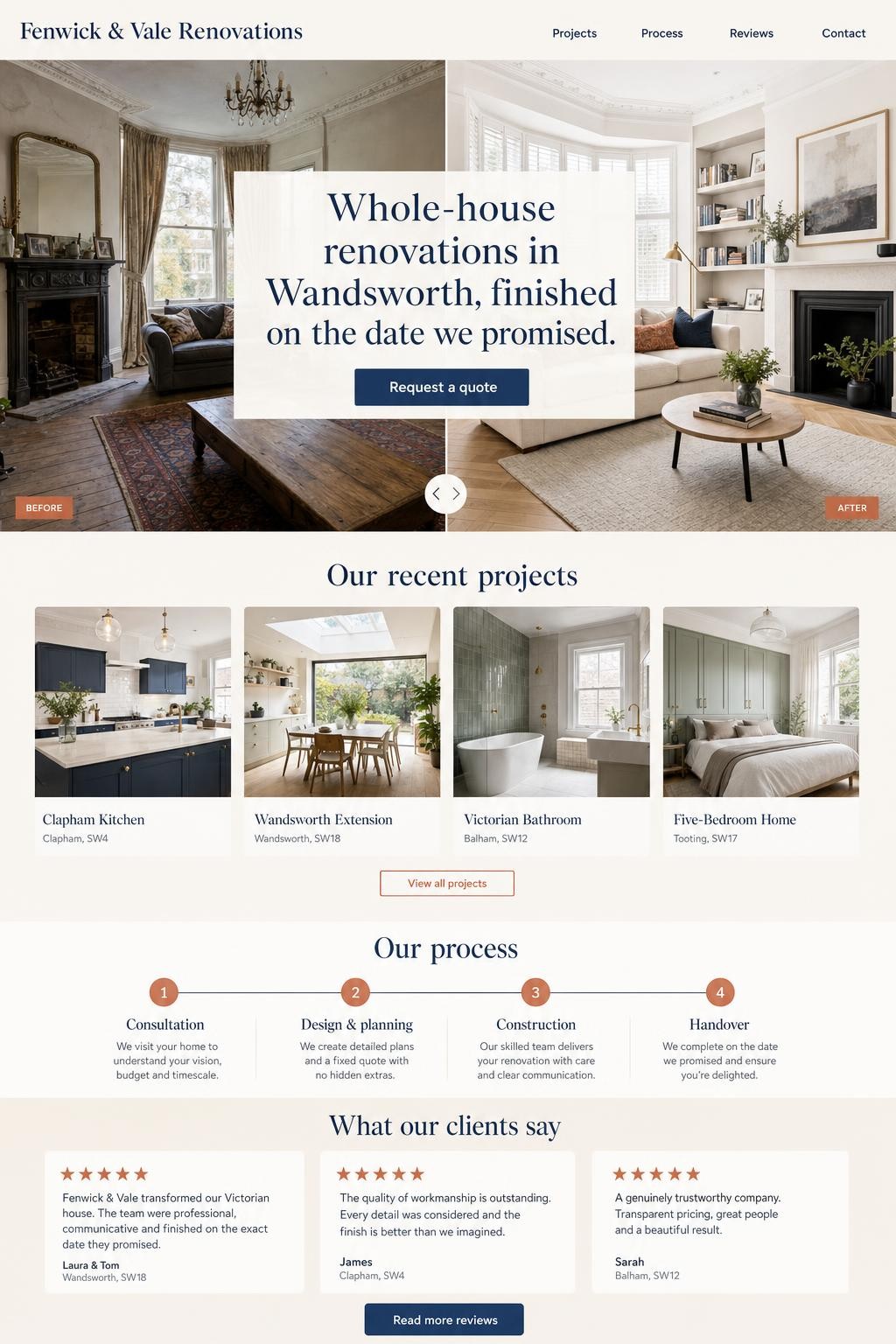
Turn a portfolio into a reason to get in touch.
Explore the concept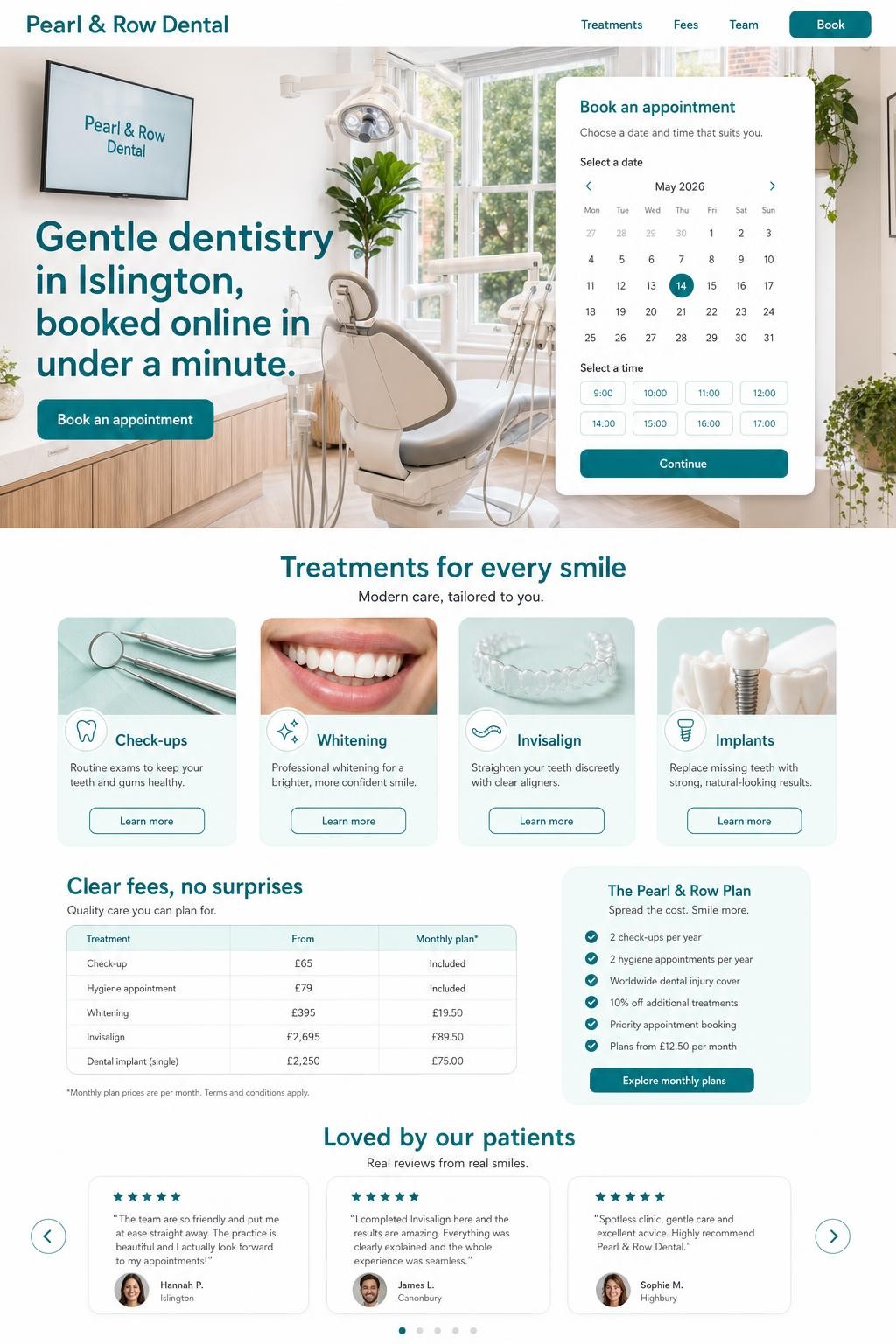
Help people choose a service and plan a visit.
Explore the conceptHelp visitors understand your services, find credible evidence and send a useful enquiry. We agree the pages, content and enquiry journey before design begins, so the build has a clear scope.
An agreed page map, service information and enquiry routes built around customer questions. We identify useful existing content and agree who writes, supplies and approves each part.
A visual direction, mobile and desktop layouts, and reusable components. Choose an adapted concept or a bespoke design, with the pages and review stages set out in your proposal.
Descriptive page titles, internal links and a sitemap, plus mobile, keyboard and performance checks. For a redesign, we review useful URLs and plan redirects for changed addresses.
Tested forms, an agreed route for enquiries and guidance on managing the site. Measurement depends on available access; hosting, third-party costs and optional ongoing care are set out in the proposal.
Start with what already works and what customers need. Your proposal sets out the agreed pages, features and responsibilities, with optional work and ongoing costs identified before the build.
Scope, pricing and ongoing careIf the current system supports the business, we can scope clearer service pages, a shorter enquiry journey or a focused redesign. Start with the pages customers use and the questions your team hears, then decide whether a rebuild is justified.
An adapted design suits a familiar page structure with a clear brief. Bespoke design makes more sense when your brand, content or customer journey needs a different structure. Both routes need your own copy, images and evidence; the public concepts are starting points.
Before selecting a content system, agree who edits services, publishes projects and manages enquiries. We check the required permissions, preview process, integrations and ongoing costs, and include a practical handover in the proposal.
Use these six prompts for your project notes. An unknown is useful to flag; you do not need a finished specification before we speak.
For a service business, our website structure guide helps you plan the pages. Use our guide to choosing useful enquiry questions to decide what to ask customers.
If your website needs to take payments or send enquiries to another system, include this in the brief. Explore eCommerce or integrations and data for these requirements.
Illustrative project
A professional firm lists all its work on one long page, so visitors cannot find the relevant service.
Separate service pages explain the offer, show relevant evidence and lead to a short enquiry form.
Compare service-page visits, form completions and the enquiries the firm marks as qualified. This is an illustrative approach, not a claimed client result.
Try the enquiry workflow demoPlanning a new site or a redesign? Send your current URL, what needs to improve and any essential features in the enquiry message. An outline is enough to start.
Tell us about your websiteThe page types, design route, content work and connections determine the quote. Share your current website, priorities and a budget range if you have one. We set out the agreed scope and build price in writing, alongside third-party costs, any applicable taxes and optional care.
The schedule depends on the agreed scope, content readiness, feedback and any connections to other systems. Tell us about a target date and what drives it. The proposal sets out the schedule and dependencies; a launch date needs an agreed brief.
The agreed pages and reusable components, tested enquiry routes, a launch checklist and guidance on updating content. The proposal identifies website and account access, asset and font licences, hosting arrangements and any separately agreed ongoing care.
We review existing URLs and Search Console data where access is available, retain useful content and map permanent redirects for changed addresses. After launch, we check the new pages and monitor indexing and enquiries. A migration can affect visibility, so preserving traffic is a process to manage rather than a guaranteed outcome.
We agree this before quoting. Writing and image preparation can be scoped into the project. Your team supplies accurate business details, permission to show customer work and approval of the content. The designs shown on this page are illustrative concepts, not claimed client projects.
Tell us who will edit services, publish projects and manage enquiries. We agree the content system, permissions and handover around those tasks before choosing the build approach. Ongoing support and content work depend on the care plan you choose; they are not assumed to be included in the build.
Agree how the site will be edited, tested and operated alongside its design. The proposal should make each responsibility clear.
A content-managed site can suit regular publishing by several people. A smaller managed site may suit a business with fewer updates. Bespoke functionality needs its own scope. We assess the editing tasks, permissions, preview needs and ongoing costs before recommending an approach.
Acceptance should describe customer tasks rather than a promise that everything is finished. Agree the checks and who reviews the result before launch.
This is an example checklist to agree in the proposal, not an additional package or a guarantee about every project.
Tell us what you have in mind. We’ll email you to arrange a short discovery call.
Prefer email? info@brandflame.co.uk
Thanks, we have your message.
We’ll review your enquiry and get in touch to discuss the next steps. Keep an eye on your inbox for a couple of call times.
We’ll review your enquiry and get in touch to discuss the next steps.
How we price your project