
Start a project

Web design / Ecommerce & Online Retail

Ecommerce design for online retailers and growing brands

A strong shop makes products easy to discover, simple to trust and satisfying to buy—on the first visit or the fifth.

Based in London. Working across the UK.

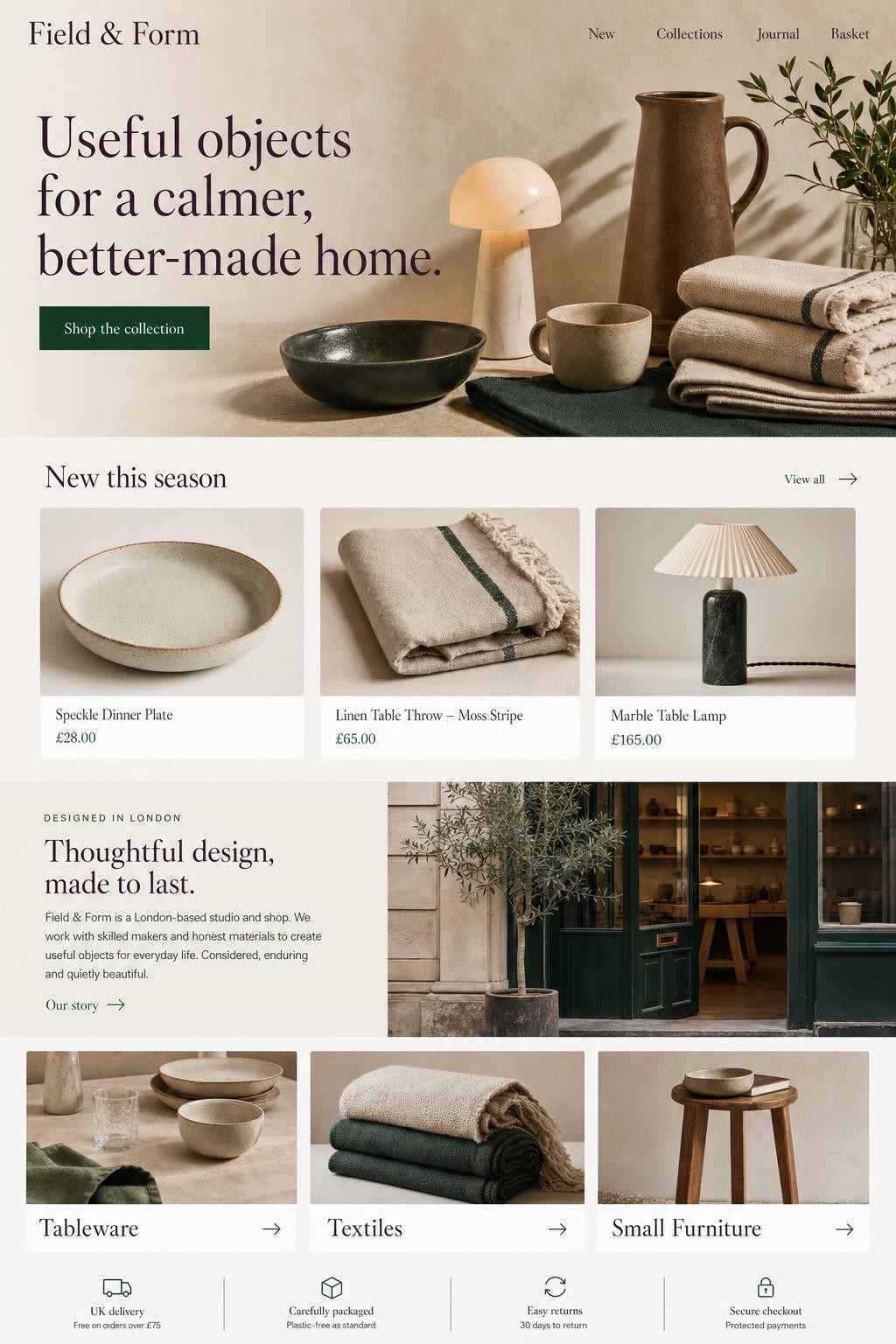
Concept ecommerce website design for a UK homeware brand: premium editorial shop with product collections

ConceptField & Form · UK · a sample ecommerce business website in the style we build

Customer journey

What your customers do before they call

Online shoppers move quickly between discovery, comparison and doubt. Photography may win attention, but delivery information, reviews, sizing, returns and the quality of the product page decide whether the basket reaches checkout.

We design ecommerce experiences around that whole decision, connecting brand storytelling to useful merchandising and a fast purchase journey that works just as well on a phone.

Questions website buyers may search for

  • ecommerce web design UK
  • Shopify website design agency
  • online shop redesign
  • ecommerce conversion optimisation UK
  • WooCommerce website design
  • product page design best practice

Illustrative searches, not measured demand. We group related questions into useful pages and check priorities against your services, customer enquiries and available search data.

What we build

What we can plan for your ecommerce business website

We agree the pages, content and enquiry journey in your proposal. The options below are shaped around your business; applications, connections and ongoing support require an agreed scope.

Collection and product discovery

Navigation, filtering and search are designed around how customers describe and compare the range, not the internal stock catalogue.

Product pages that answer objections

Imagery, variants, sizing, delivery, returns, reviews and complementary products appear in the order customers need them.

Mobile-first basket and checkout

A quick, reassuring purchase journey reduces distraction and makes payment methods, delivery choices and totals clear.

Editorial merchandising

Campaigns, buying guides and curated collections give the shop a point of view while creating valuable landing pages for search and social traffic.

Retention built into the journey

Email capture, back-in-stock messages, replenishment prompts and post-purchase content support the next order without interrupting the first.

Analytics that explain performance

Clean product and checkout tracking shows where customers hesitate, which collections work and what should be improved next.

Connected systems

Commerce integrations that remove busywork

We connect the storefront to the systems behind it, from inventory and fulfilment to subscriptions, wholesale ordering and customer service.

  • Inventory, fulfilment and accounting connections
  • Subscription, loyalty and wholesale customer journeys
  • Product recommendation and merchandising tools

AI solutions

Your AI agent works with the trading calendar

Send the agent a campaign brief, new range or approved product information and it can prepare collection pages, merchandising copy and site updates for review.

Available capabilities depend on your agreed plan, connected systems and publishing permissions. Usage, monitoring and human support are scoped separately.

AI assistants and workflow automation
  • Create and refresh collection landing pages
  • Prepare product copy from approved specifications
  • Update campaigns, delivery messages and buying guides

Plan the shop and the operation together.

Start with the products, the customer's buying decisions and the systems your team relies on. Separate the storefront brief from payment, stock and fulfilment dependencies.

Make product information useful

Use a representative product family to agree categories, variants, photography and the details a customer needs before buying. Confirm who supplies, approves and maintains that information.

  • How customers search, compare and choose a variant.
  • The source of catalogue, pricing and stock information.
  • Permissions for product images, brand assets and campaign material.

Define the path from checkout to fulfilment

Record how an order reaches the people responsible for it. Payment-provider setup, delivery rules and any connection to existing systems need their own access, compatibility and test arrangements.

  • Test payment success, failure and interrupted checkout with provider test facilities.
  • Agree how cancellations, refunds and stock changes are handled.
  • Clarify ownership of order records and exceptions.

Prepare for a controlled release

Agree the catalogue migration, useful existing URLs, representative customer journeys and who approves the release. A campaign screenshot alone is not evidence that payment or fulfilment functionality has been delivered.

  • Review mobile product pages and the agreed checkout journey.
  • Check migrated product information against the approved source.
  • Record support responsibilities and unresolved release items.
Discuss your retail website

Four stops from first call to live site.

  1. Discover

    Agree the audience, customer tasks, existing systems and evidence available. Confirm the scope, costs, responsibilities and dependencies before setting milestones.

  2. Design

    Review the page structure, mobile journeys and approved content. Resolve questions about imagery, editing and the next action before the build.

  3. Build

    Develop the agreed pages and connections. Check forms, permissions, responsive layouts and failure paths against the acceptance brief.

  4. Launch

    Complete the agreed checks and content approval, then confirm access, handover and the support route. Any ongoing work is defined separately.

Before we begin

Questions ecommerce founders and retail teams ask us

Answers specific to this business type. Anything else, just ask.

Do you work with Shopify and WooCommerce?

Yes. We choose or retain the platform based on catalogue complexity, integrations, team workflow and the total cost of operating it—not preference alone.

Can you improve an existing shop without rebuilding everything?

Often. We can audit product discovery, templates, speed, analytics and checkout, then improve the highest-impact parts while preserving useful platform work.

Will you migrate products, customers and orders?

Yes. A migration plan maps products, variants, redirects, customer permissions and historical data, with test imports before launch.

Guides for ecommerce founders and retail teams

All ecommerce & online retail guides

Tell us about your ecommerce business.

Tell us what you have in mind. We’ll email you to arrange a short discovery call.

Prefer email? info@brandflame.co.uk

Add business details (optional)

How we use your details: our privacy notice.

What happens next

  1. We read your message and review your current digital presence and goals.
  2. We book a thirty-minute video call at a time that suits your week.
  3. Once the scope is agreed, we’ll set out the proposed work, costs and schedule in writing.

We’ll review your enquiry and get in touch to discuss the next steps.

How we price your project